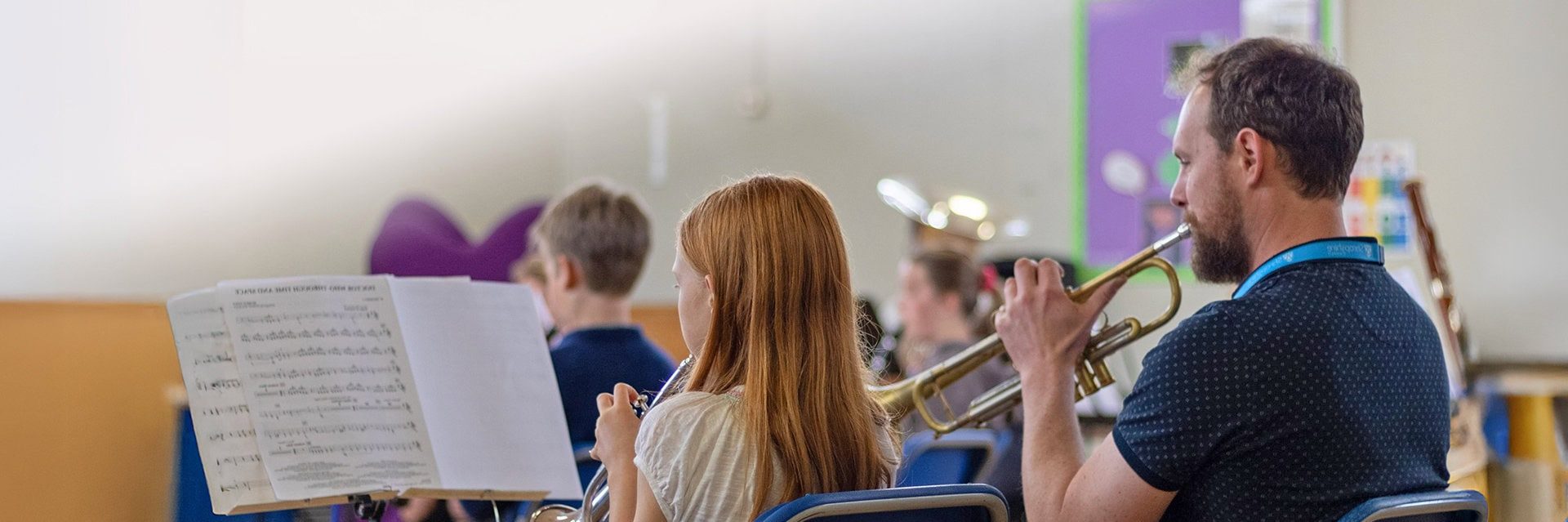
Brass instruments carry special appeal. The bright, soaring tone of trumpet, the mellow warmth of French horn, the energetic bluster of trombone, the foundational depth of tuba, the lyrical beauty of cornet, each offers distinct musicality. Our teachers across Shropshire teach all brass instruments, guiding learners from first notes through to confident performance and grade achievement.
Brass instruments develop breath control, embouchure strength, and physical coordination intensively. The muscles controlling brass playing respond to training, becoming stronger and more flexible over time.
Brass has rich cultural roots. From classical concertos to jazz improvisation, from brass band traditions to contemporary film scores, brass instruments feature prominently. This heritage gives learners deep musical traditions to draw from.
Brass suits ensemble playing particularly well. Brass sections create blend and power impossible to achieve with single instruments. Many brass learners find ensemble experience equally rewarding as solo study.
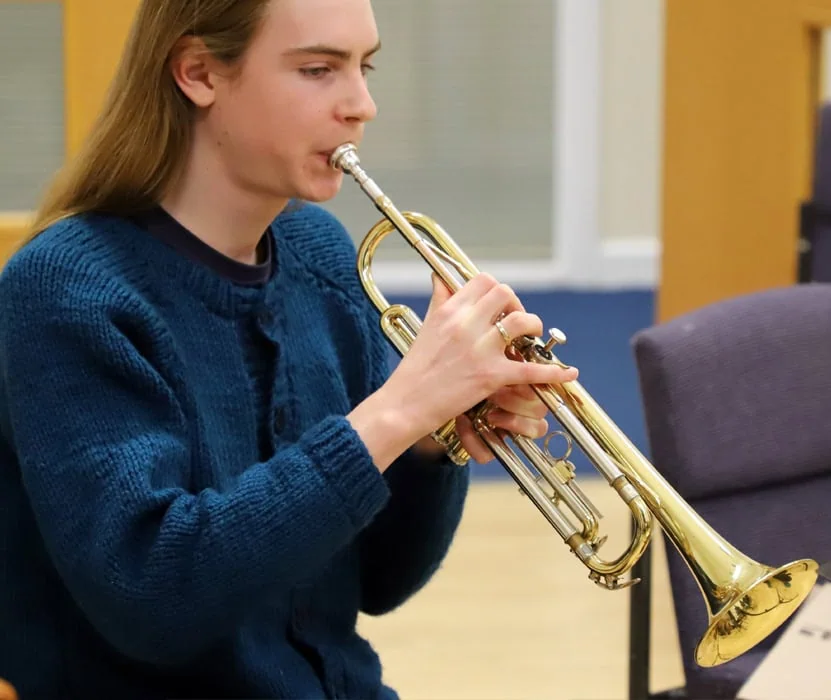
Trumpet’s bright, soaring tone makes it immediately satisfying. Learners often gravitate towards trumpet because the sound appeals so strongly. The instrument develops embouchure control, breath support, and finger precision.
Trumpet suits beginners well. The learning curve allows productive play within weeks. Most learners play simple melodies within 4-8 weeks with consistent practice.
Trumpet repertoire spans classical concertos, jazz improvisations, folk tunes, and contemporary pieces. This breadth means trumpet suits diverse musical interests.
Cornet resembles trumpet but offers slightly warmer, mellower tone. The bore design makes cornet slightly easier for some learners, though this varies individually.
Cornet suits learners interested in brass band tradition particularly. British brass bands rely heavily on cornet. If brass band playing appeals to you, cornet becomes the natural instrument.
Cornet technique mirrors trumpet closely, so learners can transfer between instruments. Many brass players learn both.
Trombone’s distinctive slide mechanism sets it apart from other brass instruments. Rather than pressing valves like trumpet, trombone players move a slide, creating smooth pitch changes.
Trombone suits learners interested in jazz, big band music, and orchestral playing. The instrument’s flexibility allows tremendous expression.
Young learners can start trombone around age 8-9. The instrument requires adequate strength and coordination, though these develop quickly.
French horn produces mellow, warm tones central to orchestral sound. The instrument’s hand position (inside the bell) creates its distinctive character.
French horn suits learners interested in orchestral playing and chamber music. The instrument demands careful listening and breath control.
French horn learning takes patience initially. The learning curve feels steeper than trumpet. However, reaching competence feels particularly rewarding.
Both examining boards offer brass grades spanning beginners through advanced levels. Grades 1-8 provide clear frameworks across all brass instruments.
Exam preparation typically requires 12-16 weeks for early grades, increasing for later grades. Your teacher guides preparation thoroughly, balancing set pieces, scales, sight-reading, and aural work.
Tuba provides foundational bass for orchestras, bands, and brass ensembles. The instrument’s warm tone grounds harmonic structures.
Tuba suits learners interested in ensemble foundation work and brass band playing. The instrument demands physical presence, tubas are large but delivers unique satisfaction.
Younger learners can start tuba once they’ve developed sufficient physical strength, typically around age 10-11.
Proper brass technique from the start prevents injury and enables sophisticated playing later. Key areas include:
Our teachers emphasise these foundations early. Initial awkwardness gives way to natural movement with consistent practice.
Brass bands remain a cherished British tradition. If your interest lies in brass band playing, our teachers guide you towards this goal. Brass bands suit all experience levels, from complete beginners to advanced musicians.
Playing in a brass band combines social community, musical development, and the special joy of making powerful music together. Many learners find brass band environment particularly rewarding.
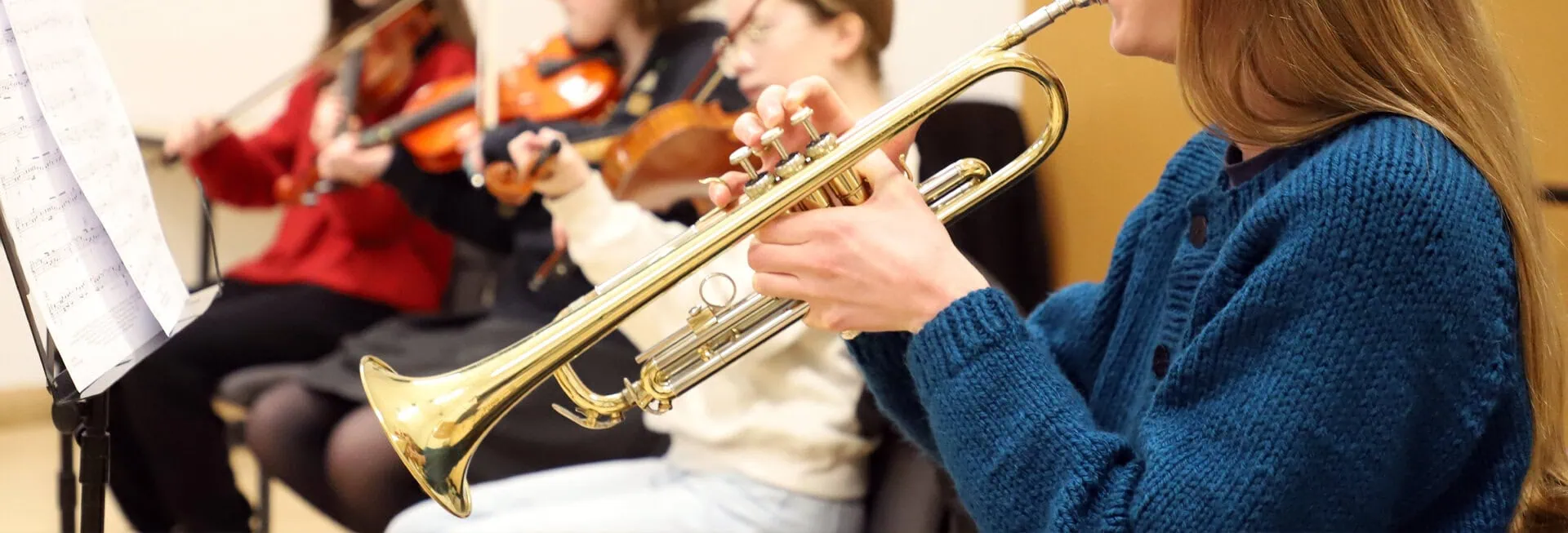
Brass shines in ensemble contexts. Orchestras, bands, chamber groups, and jazz ensembles all feature brass. Ensemble playing develops different skills than solo study: listening to blend, responding to other musicians, and creating power and colour together.
We facilitate ensemble participation. Many brass learners play in school bands, youth orchestras, or community brass bands alongside individual lessons.
Starting brass requires a decent beginner instrument. Our hire scheme provides quality instruments at reasonable monthly cost. Hired instruments receive regular maintenance ensuring consistent playability.
As your playing improves, we advise on whether purchasing makes sense. Many learners use hired instruments throughout learning; others invest in their own once confident about long-term involvement.
Regular practice drives brass progress more than lesson frequency. We recommend:
We provide practice guides and support if you encounter difficulties.
Our brass teachers hold appropriate qualifications and bring varied specialisms. Many hold teaching diplomas, university music degrees, or substantial performance experience. Most teach multiple brass instruments.
Teachers work across:
We match teachers based on teaching approach, specialisms, and personality fit.
Brass lessons happen:
Flexibility accommodates school timetables.
Group lessons offer distinct advantages. Ensemble playing develops ensemble listening. Seeing other learners progress provides motivation. Group lessons cost less, improving accessibility.
Group lessons are typically run in pairs of learners at similar levels.
Your initial lesson covers:
Most beginners leave excited, having produced recognisable sounds and understanding the path ahead.
Brass lesson pricing varies based on lesson length (our lessons start at ten minutes and work upwards to one hour), instrument choice, and whether tuition is individual or small group. Current rates are available on enquiry.
To start:
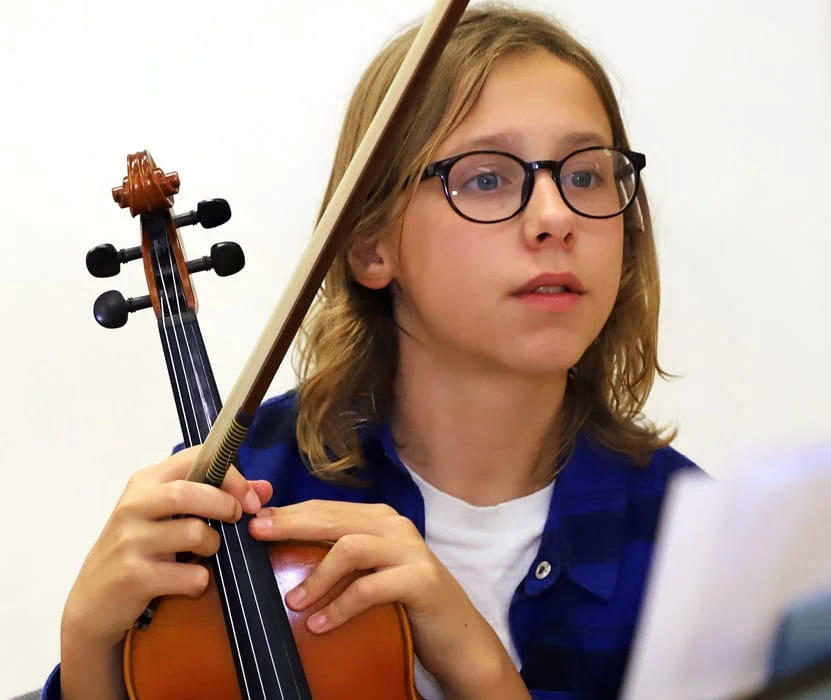

Here are some common questions we are asked
and if you have some that are not covered here, please do get in touch on our contact page.
Either approach works. Hiring removes financial risk initially; purchasing happens once you’re confident about long-term involvement.
Trumpet or cornet suit most beginners. French horn and trombone work too. Tuba and baritone come later. Teachers advise based on interest, hand size, and physical development.
Most learners play simple melodies within 4-8 weeks with consistent practice.
Learning to produce clear initial sound requires practice. However, this barrier reduces quickly. Most learners feel capable within weeks.