Playing violin opens doors to a lifetime of musical enjoyment. If your child is picking up a bow for the first time, learning violin with qualified teachers right here in Shropshire makes the journey rewarding and achievable.
The violin suits learners of all ages. Children benefit from developing discipline, fine motor control, and mathematical thinking.
Our teachers across all areas of Shropshire help students progress through grades at a pace that suits them, building confidence alongside technique.
We follow structured learning pathways that align with Music Mark’s A Common Approach, ABRSM and Trinity exams. Starting with correct posture and bow hold, students learn to play within weeks. Our mixed-ability approach means you won’t feel rushed or held back. Some students progress to Grade 5 and beyond; others simply enjoy playing for personal satisfaction. Both paths are equally valid.
Teachers assess each student individually during the first lesson. This helps us understand your musical background, goals, and any previous experience. Most beginners start with group work to build confidence, then move to one-to-one tuition to refine technique and prepare for exams.
Children aged 5 and upwards respond well to violin tuition. Younger learners benefit from playful approaches that don’t feel like formal lessons. We use a variety of teaching methods and reward systems that keep motivation high.
Typical progression sees a beginner playing simple melodies within 6-8 weeks. By Grade 1, learners understand basic theory, can read treble clef fluently, and have developed reasonable hand positioning. Our exam board aligned teaching ensures exam papers never feel like a surprise.
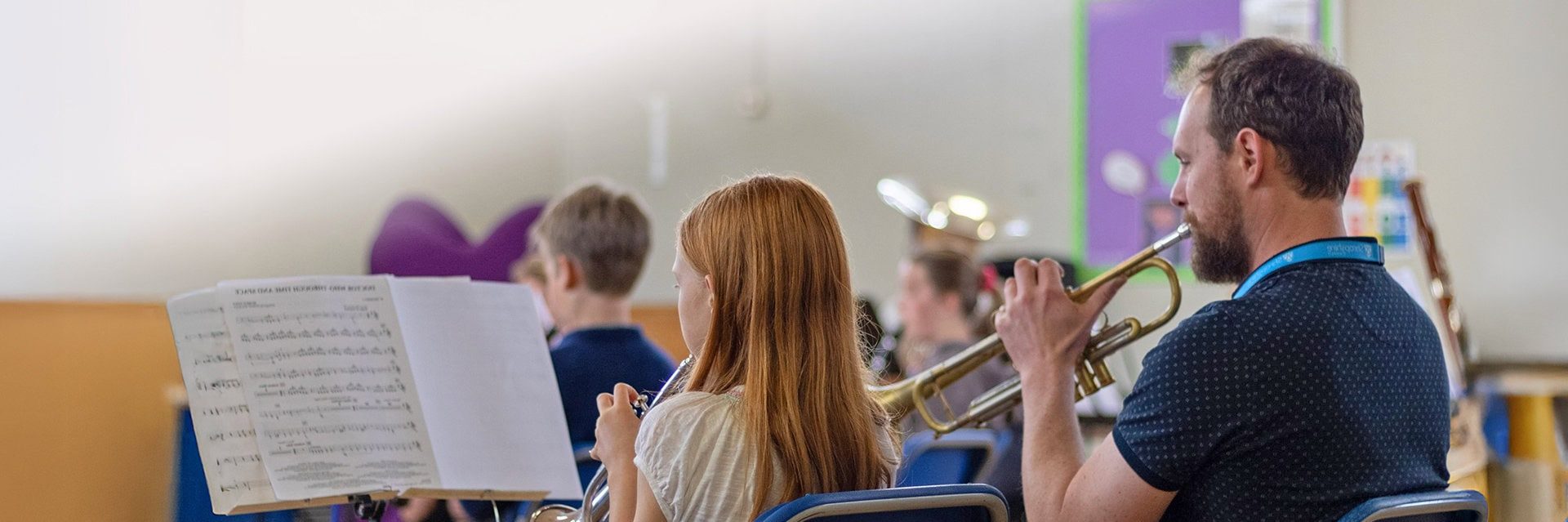
Group lessons work particularly well for younger violinists. Ensemble playing from an early age builds listening skills and social musicality. We often run pairs or small groups within schools across Shropshire, then offer individual lessons for those targeting grades or wanting focused technical work.
ABRSM grades 1 through 8 follow clear criteria. Our teachers prepare you thoroughly. This includes learning three set pieces, scales, arpeggios, aural work, and sight-reading.
Trinity exams follow similar structures with slightly different repertoire options. Both examining boards offer practical pathways through the grades. We’ve supported hundreds of students through these exams; our pass rates reflect the thorough preparation our teachers provide.
Exam practice happens within lessons from early on. We simulate exam conditions during sessions, discuss marking schemes, and build the confidence needed when sitting before an examiner.
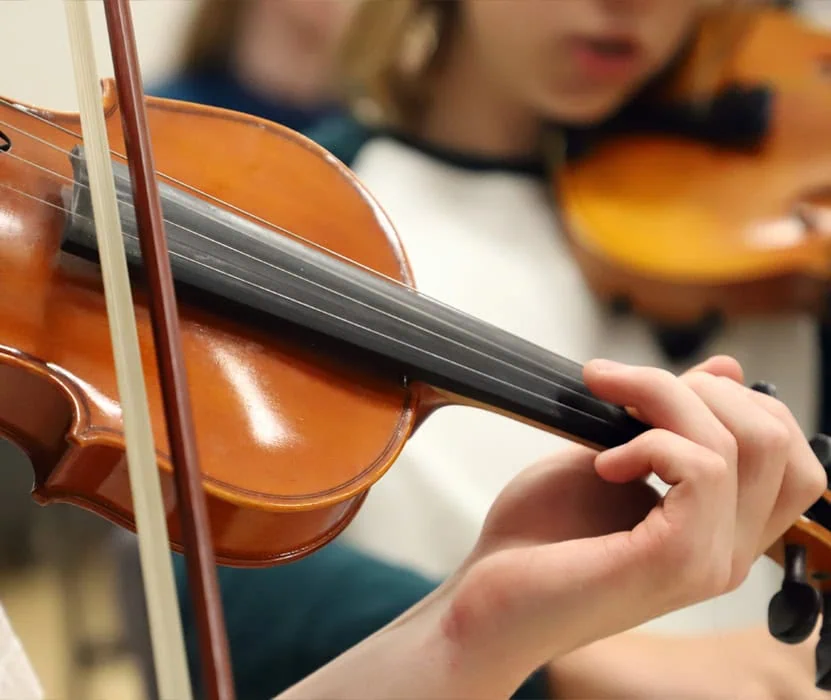
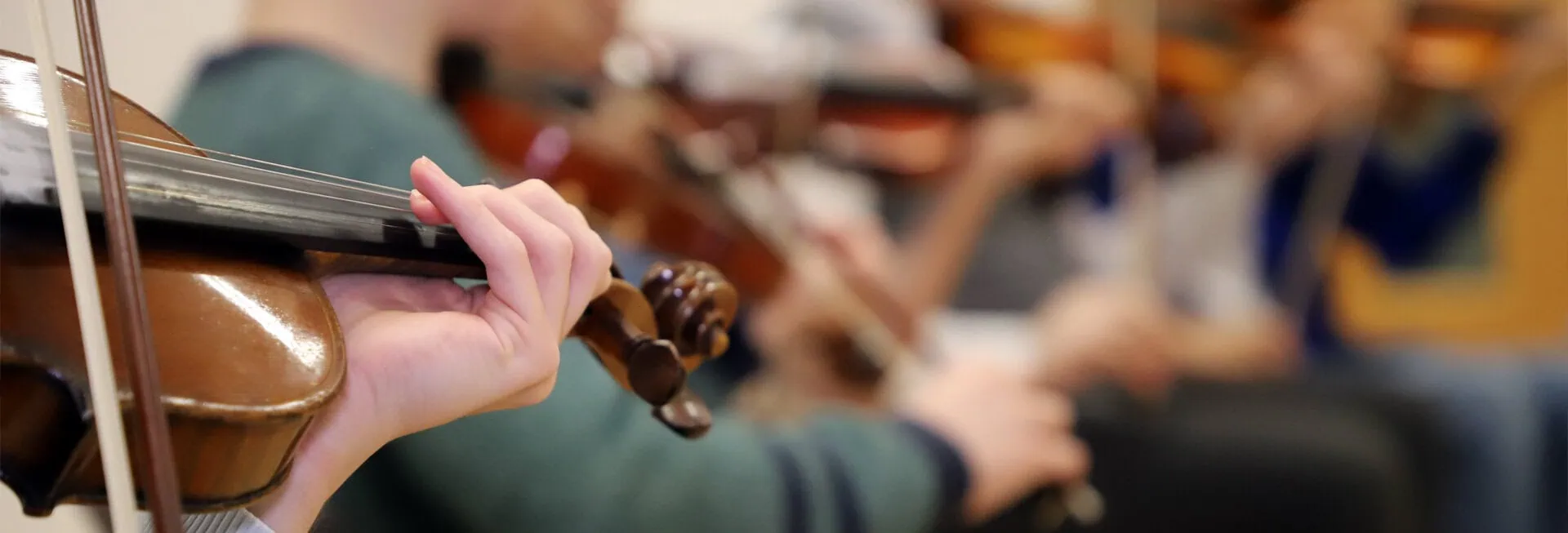
Solo playing matters, but ensemble experience enriches musical development enormously. We run ensembles and orchestras across Shropshire, bringing together players at similar levels. Stompers – our beginner orchestra – welcome students who can play five notes confidently. These free groups are offered across the County. Our Youth Orchestra and Folk Ensemble welcomes violinists from Grade 3 upwards.
Playing in an ensemble teaches you to listen sideways as well as inwards. You develop rhythmic precision, understand harmonic colour, and experience the particular joy of making music with others. Many students discover they prefer ensemble playing to solo study, and that’s perfectly fine.
“My daughter’s confidence has completely transformed since she started violin lessons with SMS”
Parent, Shrewsbury
Starting violin needn’t mean buying an expensive instrument outright. Our instrument hire scheme offers well-maintained violins at reasonable cost. Hired violins get checked regularly, so playability stays consistent. This removes financial barriers to starting lessons.
As your playing improves, we’ll advise on whether to purchase. Some students use hired instruments throughout their learning; others invest in their own once they’ve confirmed they want to continue long-term. This flexible approach works well for families weighing up commitment levels.
Our violin teachers combine formal qualifications with substantial teaching experience. Most hold teaching diplomas or equivalent, and many still perform in orchestras or chamber ensembles. Active musicians make better teachers because they understand current performance standards and maintain enthusiasm for the instrument.
Teachers work across all areas of Shropshire including:
We match teachers to students carefully, considering teaching style, age group experience, and learning preferences. If you’d like to meet a specific teacher before committing, we can arrange this during initial enquiry.
Your first violin lesson covers:
Most beginners leave their first lesson feeling excited. You’ll play something recognisable (even if it’s just open strings with rhythm), and you’ll understand what practice between lessons involves.
We send home a beginner practice booklet. Fifteen minutes daily works better than two hours once weekly. Consistency matters far more than intensity, especially early on.
Violin lessons happen:
Flexibility accommodates school timetables. If a particular location works better for you, mention this when you enquire.
Pricing varies based on lesson length (lessons can start at ten minutes or run up to one hour), and whether tuition is individual or small group. Contact us for current rates and to discuss what suits your budget.
Many schools offer violin lessons as part of wider music provision, sometimes subsidised for disadvantaged pupils. Check with your child’s school about availability.
Here are some common questions we are asked
and if you have some that are not covered here, please do get in touch on our contact page.
Age 5 is typical, though some schools start at 7. Younger learners need smaller instruments and shorter lessons. We’ll advise based on your child’s maturity and interest.
Within 6-8 weeks, most beginners play recognisable melodies. This happens faster than many expect because violin success builds quickly with consistent practice.
The learning curve feels steeper initially than piano or guitar. Sound quality matters from day one. However, this steepness flattens significantly after 3-4 months. Learners who stick through the early phase find it rewarding.
A decent beginner violin (not expensive) helps. Cheap instruments frustrate learners because they sound poor and play unevenly. Our hire scheme provides suitable instruments at reasonable cost.
Once weekly suits most learners. This frequency maintains momentum without overwhelming practice time..