
Learning guitar appeals to people of all ages. The instrument suits absolute beginners through to advanced musicians. Whether you’re drawn to classical technique, fingerstyle folk, blues, rock, or contemporary singer-songwriter styles, guitar accommodates diverse musical tastes. Our teachers across Shropshire guide learners from first finger position through to confident performance.
Guitar engages learners quickly. Unlike some instruments, you can play recognisable songs within weeks rather than months. This early success builds confidence and sustains practice motivation.
The guitar suits self-directed learners. You’ll find tutorial videos online, which means independent learners can progress between lessons. However, structured teaching accelerates learning, builds correct technique, and prevents bad habits developing.
Socially, guitar connects people. From casual strumming at gatherings to busking on high streets, from joining local bands to writing original songs, guitar facilitates connection. Many learners cite the social dimension as equally important as musical skill itself.
Our teachers work primarily with acoustic and classical approaches. These foundations suit all learning styles and ages. Within these, you’ll explore diverse repertoire: folk songs, classical pieces, contemporary singer-songwriter material, and blues.
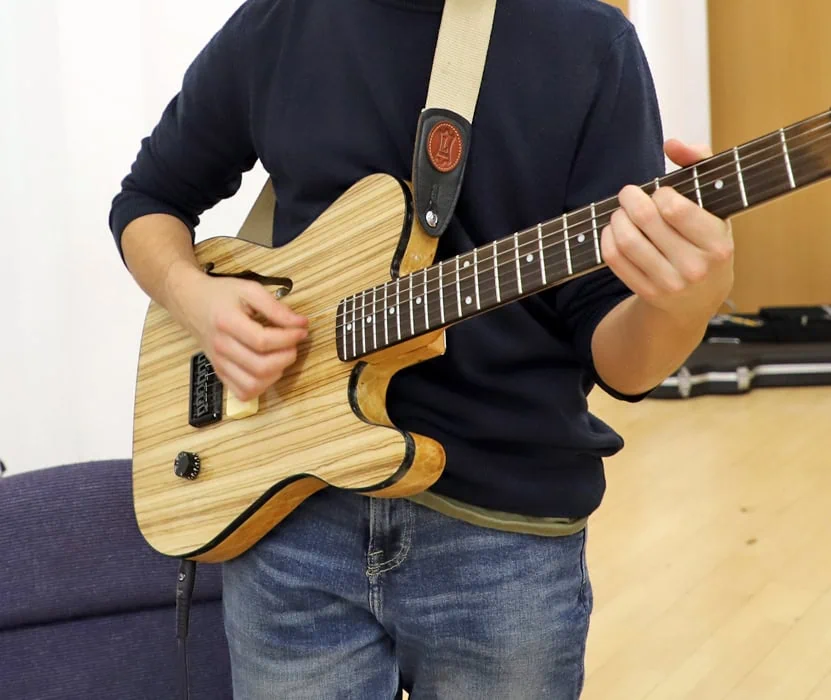
If you’re interested in electric guitar or specific genre work beyond our current offering, ask during enquiry. We’ll be honest about our strengths and suggest alternative approaches if needed.
Children aged 6 upwards can start guitar. Younger learners benefit from smaller instruments (1/2 or 3/4 size) and shorter, playful lessons. We combine technical work with songs children enjoy, keeping engagement high.
Young learners typically progress through simple folk tunes, recognisable tunes, and eventually contemporary songs they’ve sometimes chosen themselves. Seeing tangible progress towards music they recognise keeps motivation strong.
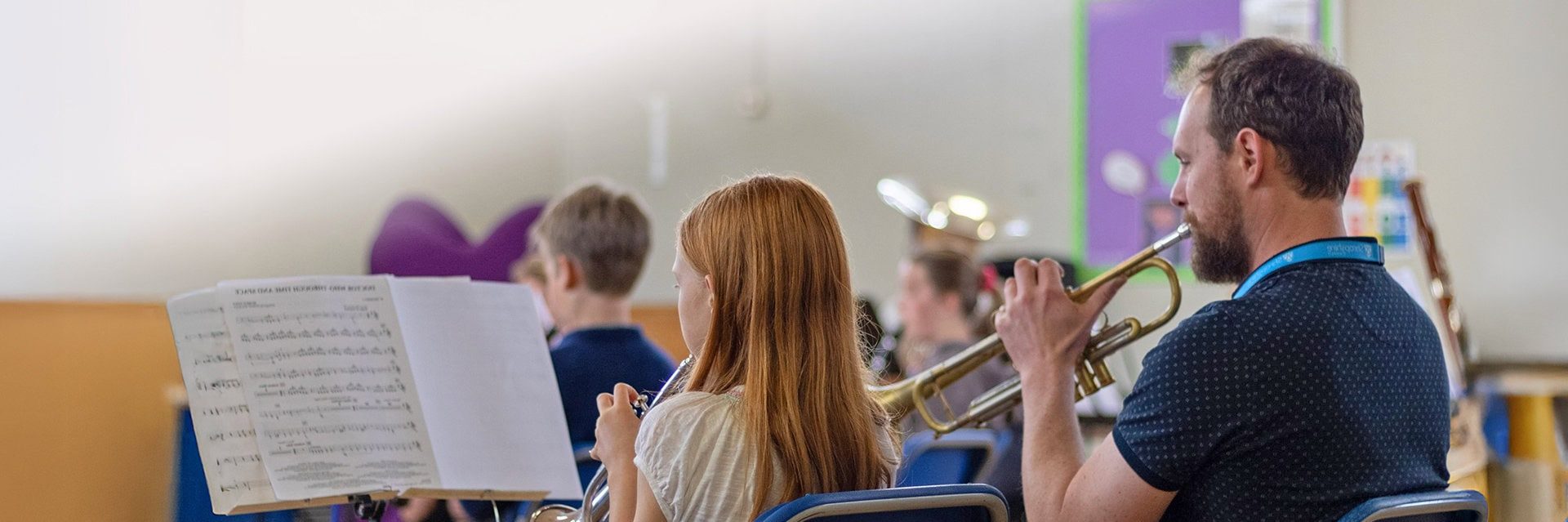
Group guitar lessons work well in schools. We run classes across Shropshire where learners develop basics alongside peers. This social dimension appeals to young learners while keeping costs lower for families.
Teenagers bring clearer musical tastes and stronger motivation. Many want to play songs they hear on radio or streaming services. We work with popular music arrangements, recognising that teenage learners develop technique most enthusiastically when repertoire appeals to them.
Some teenage learners have childhood guitar experience they’re returning to; others start completely fresh. Either way, teenagers typically progress quickly because their hands are larger, their concentration is stronger, and their musical taste is established enough to drive practice.
Teenage lesson content includes technique work, music theory integration, and substantial focus on repertoire they’ve chosen. This shift towards autonomy works well for adolescent development.
Classical guitar emphasises correct posture, right-hand technique, and left-hand positioning from the start. These foundations prevent injury and enable more sophisticated playing later.
Classical lessons typically include technical studies, classical repertoire from beginner level onwards, and music theory integration. Classical approach suits learners who want to develop substantial technique and play a wide range of music.
Acoustic guitar suits singer-songwriters and folk music enthusiasts. Fingerstyle technique allows playing melody and harmony simultaneously, creating rich textures from a single instrument.
Our teachers guide fingerstyle learners through technique that feels natural, piece selection that balances technical challenge with enjoyment, and the joy of playing substantial songs as complete arrangements.
Guitar exams follow clear frameworks through grades 1-8 and diplomas. All three exam boards offer vibrant guitar examining with repertoire spanning classical, folk, and contemporary styles.
Exam preparation requires 12-16 weeks of focused study for early grades, increasing to 16-24 weeks for later grades. Practice routine matters enormously; we guide families on practice structures that build steadily towards exam readiness.
Regular practice drives guitar progress more than lesson frequency. We recommend:
We provide practice guides, video demonstrations of difficult passages, and support if you get stuck between lessons.
Our guitar teachers hold appropriate qualifications and bring varied specialisms. Many hold teaching diplomas, university music degrees, or substantial performance experience. Some specialise in classical technique; others focus on folk, blues, or contemporary styles.
Teachers work across:
We match teachers to students based on teaching approach, specialisms, and personality fit. If you have specific preferences, mention these during enquiry.
Group lessons offer distinct benefits. Ensemble playing develops ensemble listening and ensemble rhythm. Seeing other learners progress provides motivation. Group lessons cost less, improving accessibility.
We run group sessions in schools and at our centre in Shrewsbury.
Group lessons are typically in pairs, with learners working at similar levels, maintaining individual attention while building social learning.
Your initial lesson covers:
Most beginners leave feeling capable and excited. You’ll play something recognisable, understand what development looks like, and feel motivated to practise.
Guitar lesson pricing varies based on lesson length (our lessons runs from ten minutes up to one hour), and whether tuition is individual or small group. Current rates are available on enquiry.
Many schools offer guitar lessons, sometimes subsidised. Check with your child’s school about current provision and any availability.
To start:
Here are some common questions we are asked
and if you have some that are not covered here, please do get in touch on our contact page.
Hand size drives guitar size. Most children under 9 start with 1/2 size; children 9-12 often use 3/4 size; older learners use full size. Teachers advise during initial assessment.
Within 4-6 weeks, most learners play recognisable songs. Simple folk tunes work surprisingly quickly.
Classical emphasises correct technique from day one, so learning feels slower initially. However, this foundation enables more sophisticated playing later. All guitar styles use similar basics.
A decent beginner guitar (not expensive) helps enormously. Poor instruments frustrate learners because sound quality matters.
Weekly lessons suit most learners. This maintains momentum without overwhelming practice expectations.