Singing involves no equipment beyond your own voice. This accessibility, combined with the profound personal expression singing allows, makes vocal music deeply rewarding. Our singing teachers across Shropshire work with children and teenagers developing technique, confidence, and musical expression through voice.
Singing is the most natural form of musical expression. Your voice reflects emotion instantly, making singing particularly intimate and expressive. Learning to sing involves developing technique, breath control, and confidence alongside musical expression.
The voice is a muscle system. Just as physical training strengthens bodies, vocal training strengthens singing voices. Training develops power, range, accuracy, and endurance. Even naturally musical singers benefit tremendously from proper vocal technique.
Singing suits learners of all backgrounds and abilities. You need not be “naturally talented” to become a confident singer. Technique and practice transform voices remarkably.
Children aged 5 upwards can learn singing formally. Young learners benefit from playful approaches: singing games, action songs, story songs with movement. These approaches develop musicality while keeping learning fun.
Child singers develop confidence through positive feedback and achievable challenges. We celebrate progress consistently, building vocal self-belief. Many children who start hesitantly become confident performers within weeks.
Group singing works beautifully for children. Singing alongside peers creates social enjoyment, reduces self-consciousness, and builds ensemble listening. Young singers often prefer group settings.
Teenagers experience voice changes requiring adapted teaching approaches. Rather than fighting voice change, we work with it, helping young singers understand their changing instrument.
Teenage learners often want contemporary styles: pop songs, musical theatre, contemporary artists they admire. We deliver this while building classical technique that supports all singing styles.
Teenage lesson content includes technique work, repertoire they’ve chosen, and building stage confidence. Many teenage singers want performance opportunities. We facilitate these through school productions, community showcases, and concert opportunities.
ABRSM, Trinity and LCM offer singing grades spanning beginners through advanced levels. Singing exams develop technical control, interpretation, and musical understanding.
Exam preparation includes learning set songs from examining board lists, developing range and control, understanding musical interpretation, and building performance confidence. Your teacher guides preparation thoroughly.
Many singers progress through grades. Others pursue singing purely for personal enjoyment without formal exams. Both pathways are equally valid.
Proper vocal technique prevents strain and enables powerful, healthy singing. Key areas include:
Our teachers build these technical elements gradually. You’ll feel immediate benefits: singing becomes easier, sounds better, and feels less tiring.
Many singers want to perform pop, rock, musical theatre, or contemporary styles rather than classical repertoire. We absolutely accommodate this. Pop singing requires different technique emphasis than classical, and our teachers deliver this expertly.
Learning popular styles doesn’t diminish classical technique. In fact, strong classical technique provides foundation for all singing styles.
Musical theatre requires blending singing, acting, and movement. Singers wanting this pathway benefit from training addressing all three elements.
We guide musical theatre singers through technique supporting vocal demands of musical theatre performance, interpretation of musical theatre repertoire, and building stage presence.
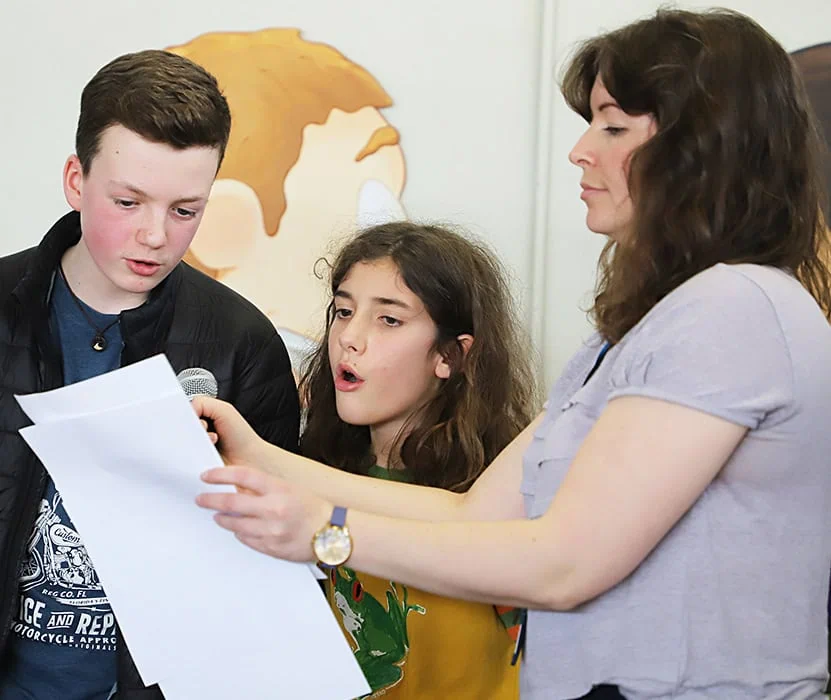
Jazz singing requires understanding phrasing, chord progressions, improvisation, and blues feeling. Jazz singers benefit from technique training alongside jazz theory and history.
We guide jazz singers through standards, improvisation fundamentals, and scat singing. Jazz and classical technique complement each other beautifully.
Singing in groups choirs, a cappella groups, jazz ensembles differs from solo singing. Group singing develops ensemble listening, blend awareness, and social enjoyment.
We facilitate group singing opportunities. Many singers pursue individual lessons while also joining school choirs, community choirs, or specialised singing groups. Shropshire Sings encompasses multiple community singing opportunities if group ensemble appeals to you.
Many singers initially worry about being “out of tune” or “not good enough”. With proper teaching and consistent practice, these worries dissolve. Singing becomes enjoyable rather than anxiety-producing.
Our teachers build confidence systematically. You’ll experience immediate improvement in first lessons. This early success sustains motivation through the practice required for ongoing development.
Singing develops most when you perform. We facilitate performance opportunities:
These performances build stage presence, reinforce learning, and create genuine reasons to practise diligently.
Our singing teachers hold appropriate qualifications and bring varied specialisms. Many hold teaching diplomas or equivalent, university music degrees, or substantial professional performance experience.
Many of our teachers teach multiple styles: classical, contemporary, musical theatre, jazz. Some teachers specialise in particular styles.
Teachers work across:
We match teachers based on teaching approach, specialisms, age group experience, and personality fit.
Singing lessons happen:
Flexibility accommodates school timetables.
Group lessons offer distinct advantages for singers. Singing alongside others builds confidence; hearing other voices inspires. Group lessons cost less, improving accessibility.
Group lessons typically feature pairs of learners at a similar level.
Your initial lesson covers:
Most singers leave excited, having experienced immediate improvement and understanding the path ahead.
Singing lesson pricing varies based on lesson length (our lessons can start at ten minutes and work upwards to one hour), and whether tuition is individual or small group. Current rates are available on enquiry.
To start:
Here are some common questions we are asked
and if you have some that are not covered here, please do get in touch on our contact page.
Absolutely. Musical ability develops through training. We’ve worked with hundreds of non-naturally-musical singers who became confident performers.
Not necessary, though many singers play piano or guitar. Singing stands alone beautifully.
Most learners sing complete, recognisable songs within 4-6 weeks with consistent practice.
Absolutely. We teach all styles. Pop, musical theatre, jazz, contemporary, all develop through proper technique.