Keyboards offer an accessible entry point to learning music for beginners of all ages. Smaller and more affordable than acoustic pianos, electronic keyboards provide complete musical functionality. Our keyboard teachers across Shropshire guide learners from first notes through confident performance.
Keyboards suit learners seeking accessible music learning. The instruments cost less than pianos, require no tuning or maintenance, and offer immediate feedback. These practical advantages make keyboard attractive for families beginning music learning.
Learning keyboard develops the same foundational music theory as piano. The keyboard layout makes intervals and chord progressions visually clear. Many musicians choose keyboard specifically because the instrument teaches theory efficiently.
Keyboards offer sonic variety. Built-in sounds let learners explore different tones: piano, organ, strings, synthesiser sounds, and more. This variety keeps learning engaging and entertaining.
Children aged 4 upwards respond well to keyboard lessons. Younger learners benefit from playful approaches that maintain engagement. The keyboard’s visual clarity appeals to children who learn well through pattern recognition.
Young keyboard learners progress through simple folk melodies and beginner pieces, building confidence through recognisable repertoire. Most learners play their first complete songs within 3-4 weeks.
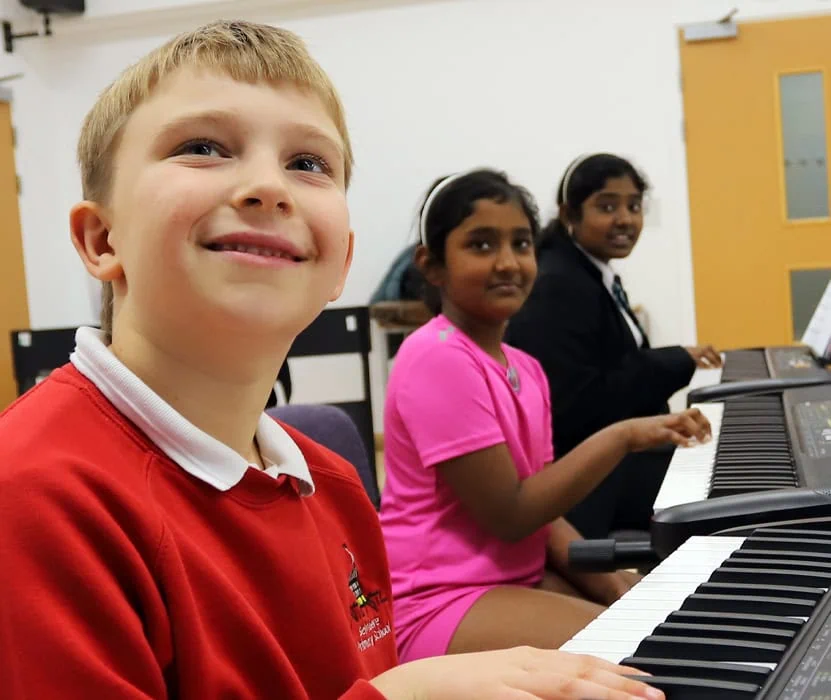
Group keyboard lessons work well in schools. We run group sessions across Shropshire where young keyboardists develop alongside peers. School settings encourage practice through peer motivation.
Teenagers often appreciate keyboard for its versatility. Some want foundation music theory before moving to other instruments; others pursue keyboard seriously for synthesiser playing or modern music creation.
Teenage learners can explore contemporary repertoire, pop and rock music, and electronic music creation alongside classical foundations. Keyboard flexibility suits teenage musical variety.
Keyboards and acoustic pianos share the same musical fundamentals. Learning keyboard builds identical music theory and keyboard technique as piano. The key difference is sound production and maintenance requirements.
Keyboards use electronic sound generation; pianos use acoustic resonance. This doesn’t affect learning music theory or technique. Learners who start keyboard can always transition to acoustic piano later if desired.
Both examining boards offer keyboard grades spanning beginners through advanced levels. Keyboard exams follow similar frameworks to piano exams.
Exam preparation typically requires 12-16 weeks for early grades, increasing for later grades. Your teacher guides preparation thoroughly, balancing set pieces, scales, sight-reading, and aural work.
Proper keyboard technique includes:
Our teachers emphasise these fundamentals early. Strong technique foundations enable sophisticated playing later.
Keyboard naturally teaches music theory. The keyboard layout makes intervals, scales, and chord progressions visually and aurally obvious.
Rather than teaching theory abstractly, we integrate theory through playing. Learners understand music theory through experiential learning, producing deeper understanding than classroom study alone.
Keyboard repertoire spans classical pieces, pop songs, jazz standards, electronic music, and contemporary compositions. This extraordinary breadth means keyboard suits virtually any musical taste.
Our teachers guide learners through repertoire matching their interests. A younger learner might progress from beginner folk songs to pop music.
Group lessons offer distinct advantages for keyboard learners. Ensemble playing develops ensemble listening. Seeing other learners progress provides motivation. Group lessons cost less, improving accessibility.
We run group sessions:
Group sizes typically range from 2-4 learners at similar levels.
Quality beginner keyboards should include:
We advise on suitable keyboards during initial consultation. Not all keyboards support proper technique development; we guide you towards instruments that do.
Regular practice drives keyboard progress more than lesson frequency. We recommend:
We provide practice guides and support if you encounter difficulties.
Our keyboard teachers hold appropriate qualifications and bring varied specialisms. Many teach keyboard and piano interchangeably; some specialise specifically in electronic music or synthesiser-based playing.
Teachers work across:
We match teachers based on teaching approach, specialisms, and personality fit.
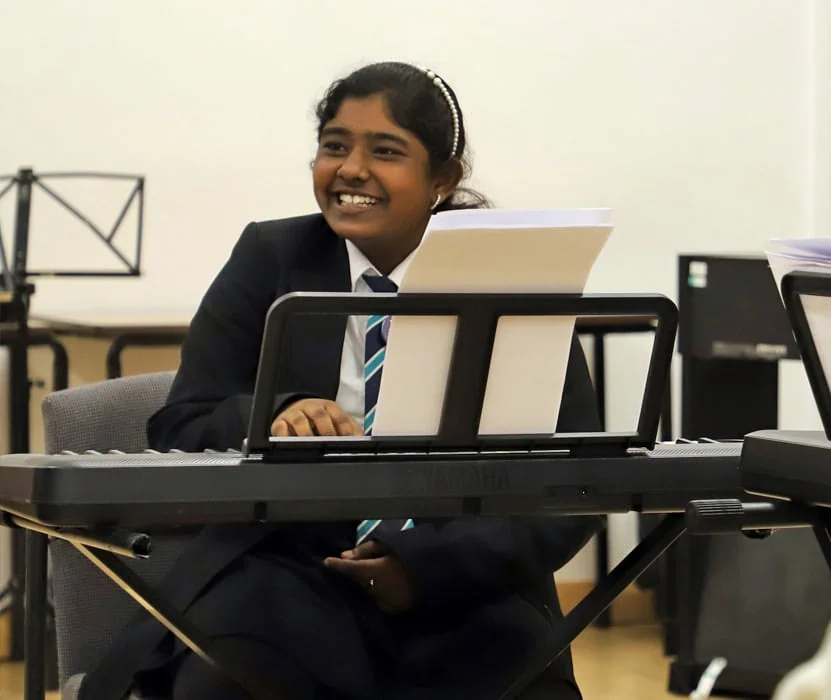
Keyboard lessons happen:
Flexibility accommodates school timetables.
Your initial lesson covers:
Most beginners leave excited, having played recognisable music and understanding the path ahead.
Keyboard lesson pricing varies based on lesson length (typically 10-60 minutes), and whether tuition is individual or small group. Current rates are available on enquiry.
To start:
Here are some common questions we are asked
and if you have some that are not covered here, please do get in touch on our contact page.
Yes, absolutely. Keyboard and piano technique transfers directly. Many learners start keyboard, then progress to acoustic piano.
Keyboard and piano teach identical fundamentals and technique. The main difference is sound production and maintenance. Learning keyboard provides excellent foundation for piano if desired.
Most learners play simple melodies within 3-4 weeks with consistent practice.