
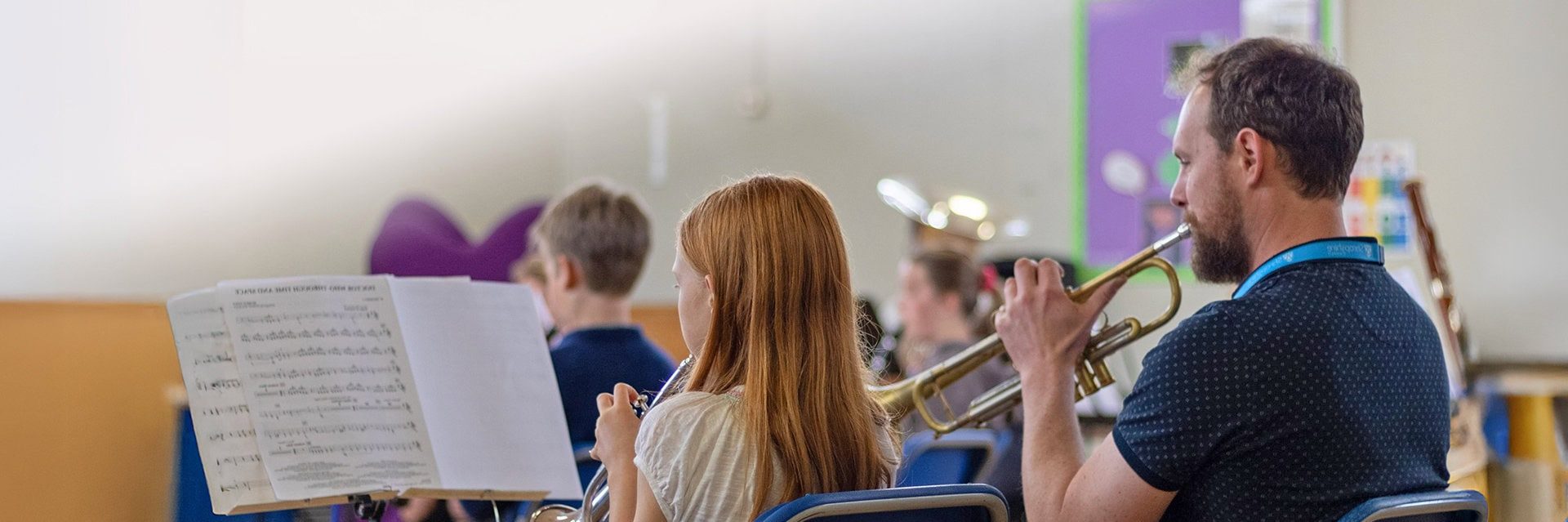
Drumming attracts learners who enjoy rhythm, movement, and immediate musical impact. From drumkit playing to orchestral percussion, from African drumming workshops to rhythm exploration, percussion offers diverse pathways. Our teachers across Shropshire work with learners of all ages, building rhythm foundations and percussion skills.
Drumming develops rhythm sense and coordination differently than pitched instruments. Playing drums involves independent limb control, building physical coordination alongside musical understanding.
Percussion provides immediate gratification. You’ll make satisfying sounds within minutes, unlike some instruments requiring weeks of foundational work. This early success builds confidence and sustains motivation.
From a neurological perspective, drumming engages both brain hemispheres intensely. The coordination required for drumming benefits learning, focus, and even athletic development. Many learners find drumming helps with concentration in other areas of study.
Drumkit suits learners interested in contemporary music, rock, pop, jazz, and funk. Learning drumkit involves developing independent limb control, understanding contemporary rhythm patterns, and coordinating with other musicians.
Our teachers guide drumkit learners through:
Drumkit learners progress through grades 1-8 using ABRSM, RSL, or Trinity frameworks, or develop practically through playing in bands and ensembles.
Some learners prefer orchestral percussion, exploring timpani, snare drum, xylophone, marimba, and melodic percussion instruments. Orchestral percussion develops different skill sets than drumkit, emphasising precision, pure tone, and sensitivity to orchestral context.
Orchestral percussion learners might progress towards playing in youth orchestras, concert bands, or chamber groups. The breadth of percussion instruments available makes orchestral pathway particularly varied.
We offer African drumming workshops exploring rhythmic traditions from diverse African cultures. These workshops teach hand drums like djembe, focussing on traditional rhythms and ensemble playing rather than formal grades.
African drumming suits learners interested in world music, ensemble participation, or simply exploring different musical traditions. Workshops run periodically and welcome learners of varying experience.
Drumming parents often ask about noise. Practicing drumkit at full volume in terraced housing creates understandable tension. We provide solutions:
We advise families honestly. If full volume drumming at home causes problems, electronic kit or practice pad becomes necessary.
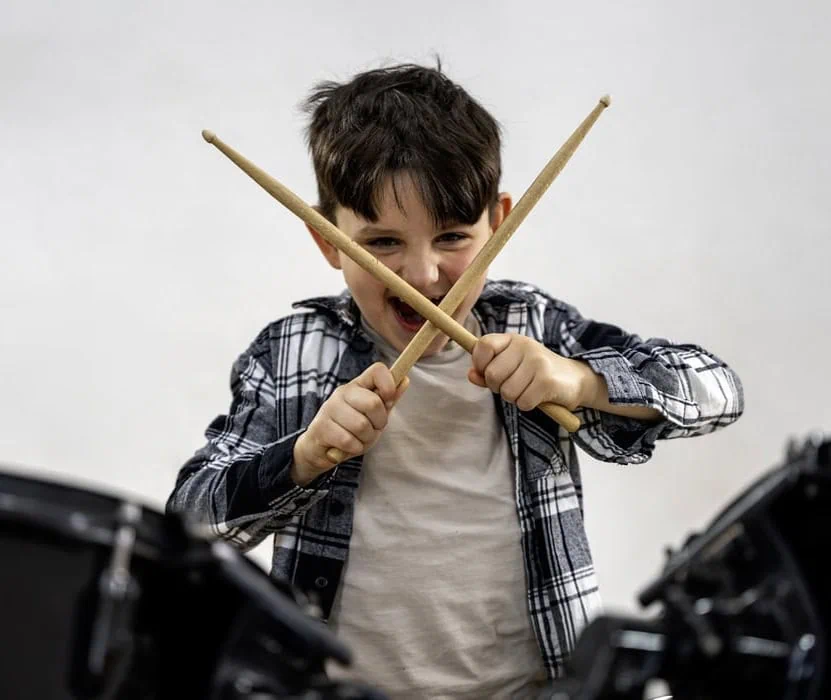
Children aged 5 upwards respond well to drum lessons. Younger learners benefit from playing hand drums or practice pads initially, developing coordination before progressing to full drumkit.
Young drumming learners often progress quickly because rhythm appeals to children naturally. Many children enjoy drumming more than melodic instruments because the immediate gratification keeps motivation high.
Group drumming circles work well for younger learners. We run school-based workshops and community sessions where children explore drumming alongside peers.
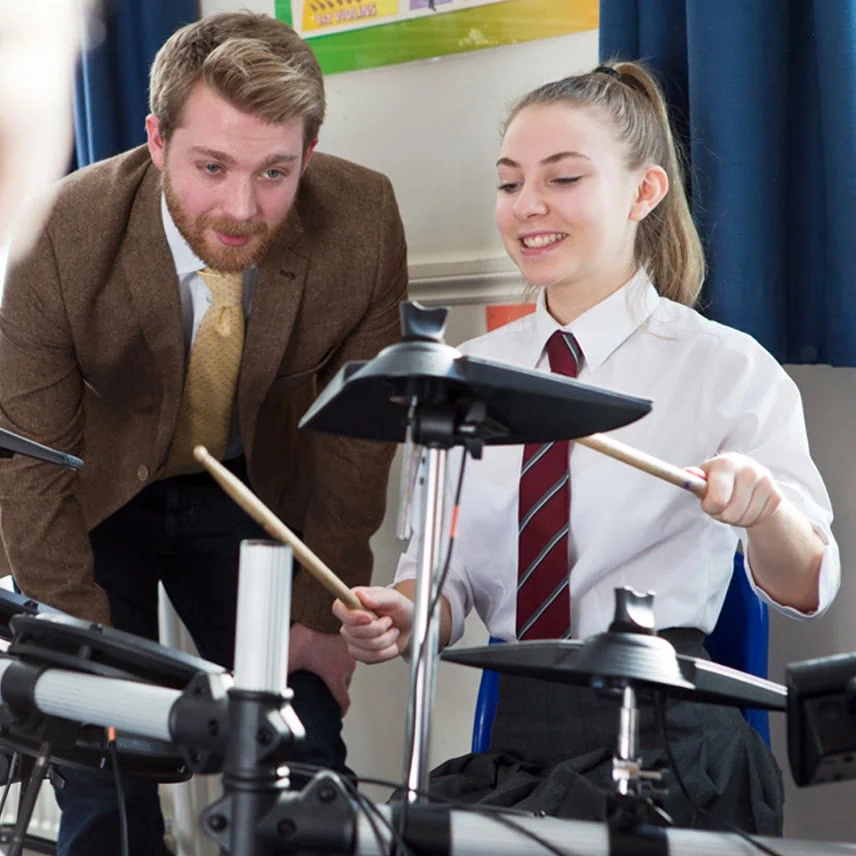
Teenagers typically bring clear musical tastes. Many want to play rock, pop, or jazz styles they hear regularly. Our teachers accommodate these interests while ensuring technical foundations develop properly.
Teenage drum learners often join bands, creating peer motivation and real performance opportunities. The social dimension of band playing appeals to adolescents.
All examining boards offer drum grades following clear frameworks. ABRSM includes traditional snare drum and drumkit pathways. Trinity similarly offers varied percussion options.
Drum exams require demonstrating technical control, rhythm accuracy, independence between limbs, and musical sensitivity.
Percussion and kit learners often join ensembles. School percussion groups, concert bands, and youth orchestras all feature percussion sections. Playing in an ensemble context develops listening skills and musicality differently than solo practice.
We facilitate ensemble participation across Shropshire, bringing together percussionists at similar levels for regular rehearsals.
Our percussion teachers hold appropriate qualifications and bring varied specialisms. Some focus on drumkit and contemporary styles; others specialise in orchestral percussion. Many teach multiple percussion instruments.
Teachers work across:
We match teachers to learners based on specialisation, teaching approach, and location convenience.
Starting drumming requires appropriate equipment. Our hire scheme includes snare drums, removing financial barriers. Hired equipment receives regular maintenance ensuring consistent playability.
Electronic drumkits offer excellent alternatives for learners concerned about volume. We advise based on your circumstances and home setup.
Regular practice drives percussion progress more than lesson frequency. We recommend:
Practice focuses on technical exercises, rhythm accuracy, and coordinated independence between limbs.
Your initial lesson covers:
Most beginners leave excited about learning and understanding what development looks like.
Percussion lesson pricing varies based on teacher experience, lesson length (our lessons start at ten minutes up to one hour), and instrument specialisation. Current rates are available on enquiry.
To start:
Here are some common questions we are asked
and if you have some that are not covered here, please do get in touch on our contact page.
Standard drumkits at full volume can disturb neighbours. Electronic kits solve this; practice pads offer quiet alternatives. We advise individually based on your situation.
Absolutely. Drumkit suits complete beginners. Rhythm foundation develops through lessons.
Drumkit emphasises coordination between limbs and contemporary rhythms. Orchestral percussion explores diverse instruments and emphasis precision, tone, and ensemble sensitivity. Both are rewarding.
Our teachers accommodate varied styles. Mention musical interests during enquiry; we’ll match you appropriately.